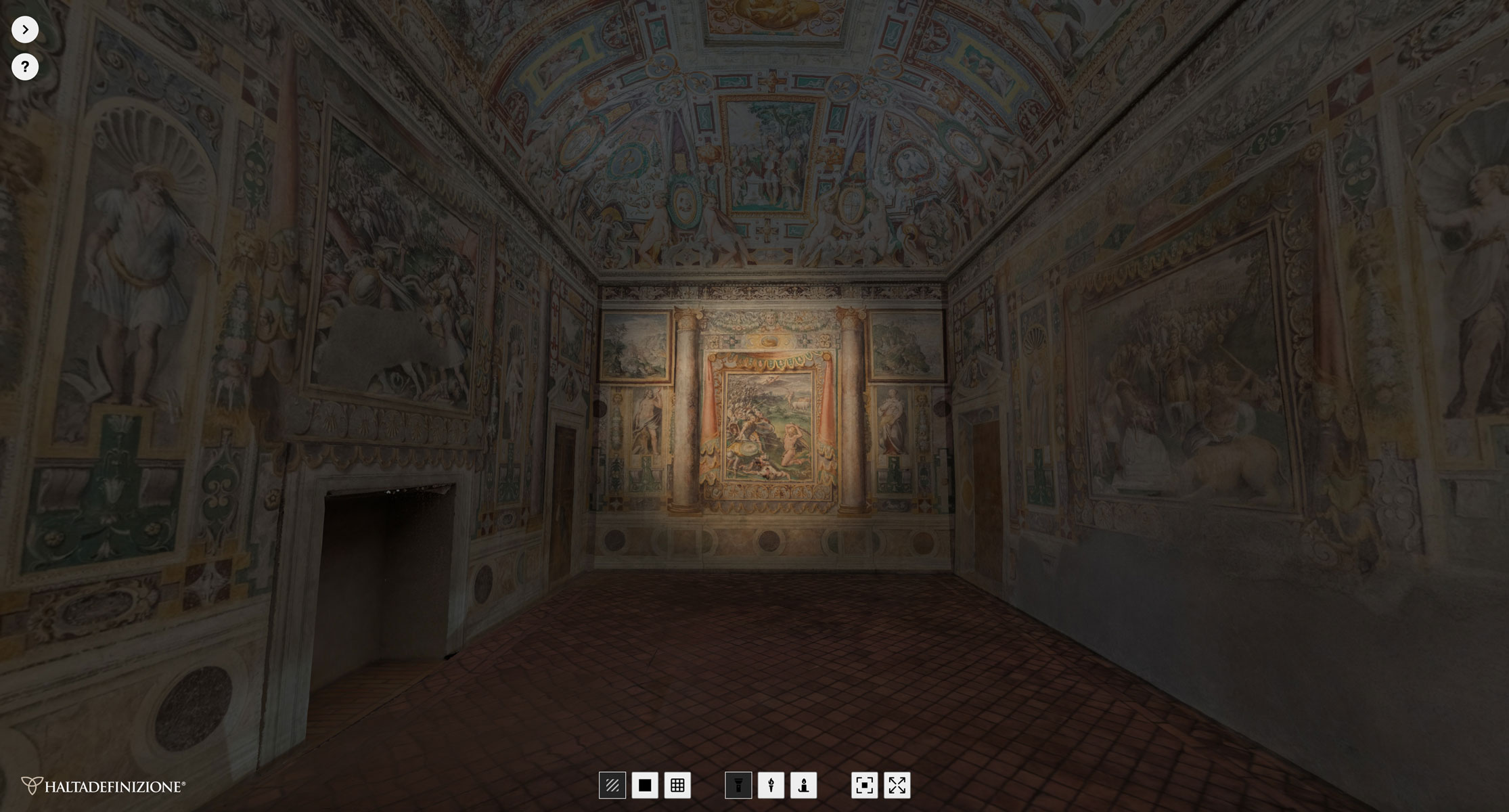
The Sala Tiburtina, also known as the First Tiburtine Room, at Villa d’Este in Tivoli can now be explored in 3D through a web-based viewer that makes it possible to analyze the role of light in the perception of space and in the legibility of the decorative cycle. The project was carried out by Haltadefinizione and Memooria, tech companies of Gruppo Panini Cultura, in collaboration with the University of Rome Tor Vergata.
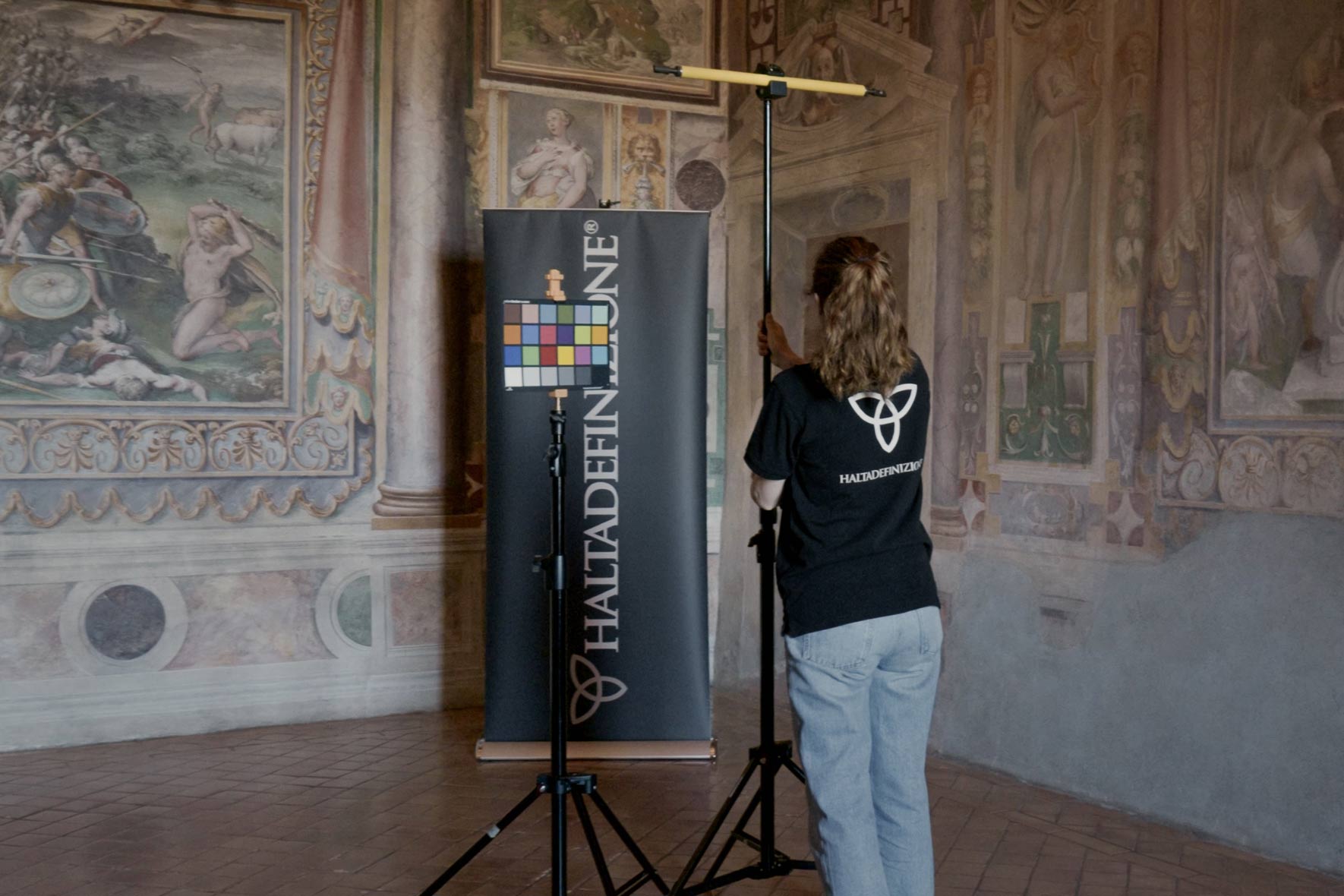
The digitization of the room was conducted through ultra-high-definition surveys, combined with panoramic spherical photographs used as a reference for reconstructing the architectural environment and the decorative cycle. On this basis, Memooria developed the 3D viewer, designed to transform the model into a navigable space.
Unlike many applications focused on static viewing, the system allows free exploration, with coherent physical constraints that provide a realistic perception of the space. Users do not simply observe the model; they can move within it, experiencing an interpretation closer to real-life perception.
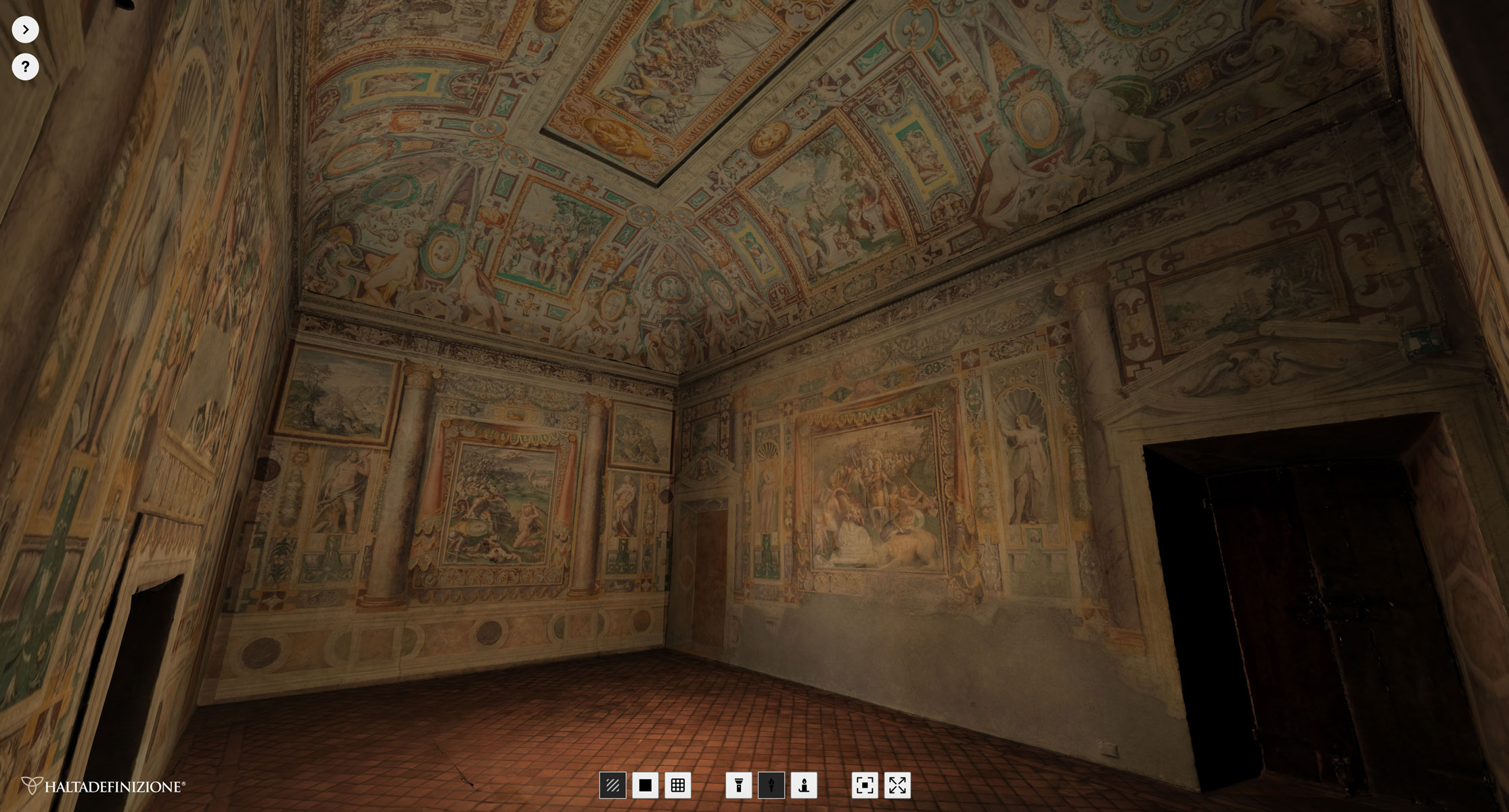
The aim of the project is precisely to restore a more realistic perception of the painted space. In this sense, light becomes a central element. The viewer integrates several lighting modes, from directional viewing to the simulation of period light sources, which significantly alter the legibility of the painted surfaces. In some configurations, the space gradually emerges from darkness, enabling a selective experience closer to the historical one.
The 360-degree 3D viewer is accessible directly via browser and forms part of the ecosystem of tools developed by Haltadefinizione and Memooria, integrating with Coosmo, the Digital Asset Management platform for managing and accessing gigapixel images and complex digital content.
At the heart of the project lies extensive art-historical research, which made it possible to reconstruct the historical conditions of viewing. The frescoes of the Sala Tiburtina, conceived to be seen in semi-darkness, are part of a complex decorative system in which architecture, painting and illusionistic devices contribute to the construction of space.
The collaboration with the University of Rome Tor Vergata confirms the role of Gruppo Panini Cultura within a research ecosystem in which digitization becomes an active part of the processes of interpretation, study and enhancement of cultural heritage. The viewer is also accessible on the website of the biannual online journal Horti Hesperidum. Studies in the History of Collecting and Art Historiography – Scaffale Tiburtino, published under the patronage of the Department of Literary, Philosophical and Art History Studies of the University of Rome “Tor Vergata”.
The project is part of S.P.A.F.E. – Sculpture, Painting and Architecture Fruition Experience, conceived, directed and coordinated by Professor Carmelo Occhipinti, within the framework of the CHANGES – Cultural Heritage Active Innovation for Sustainable Society partnership and the Lazio Technological District.